

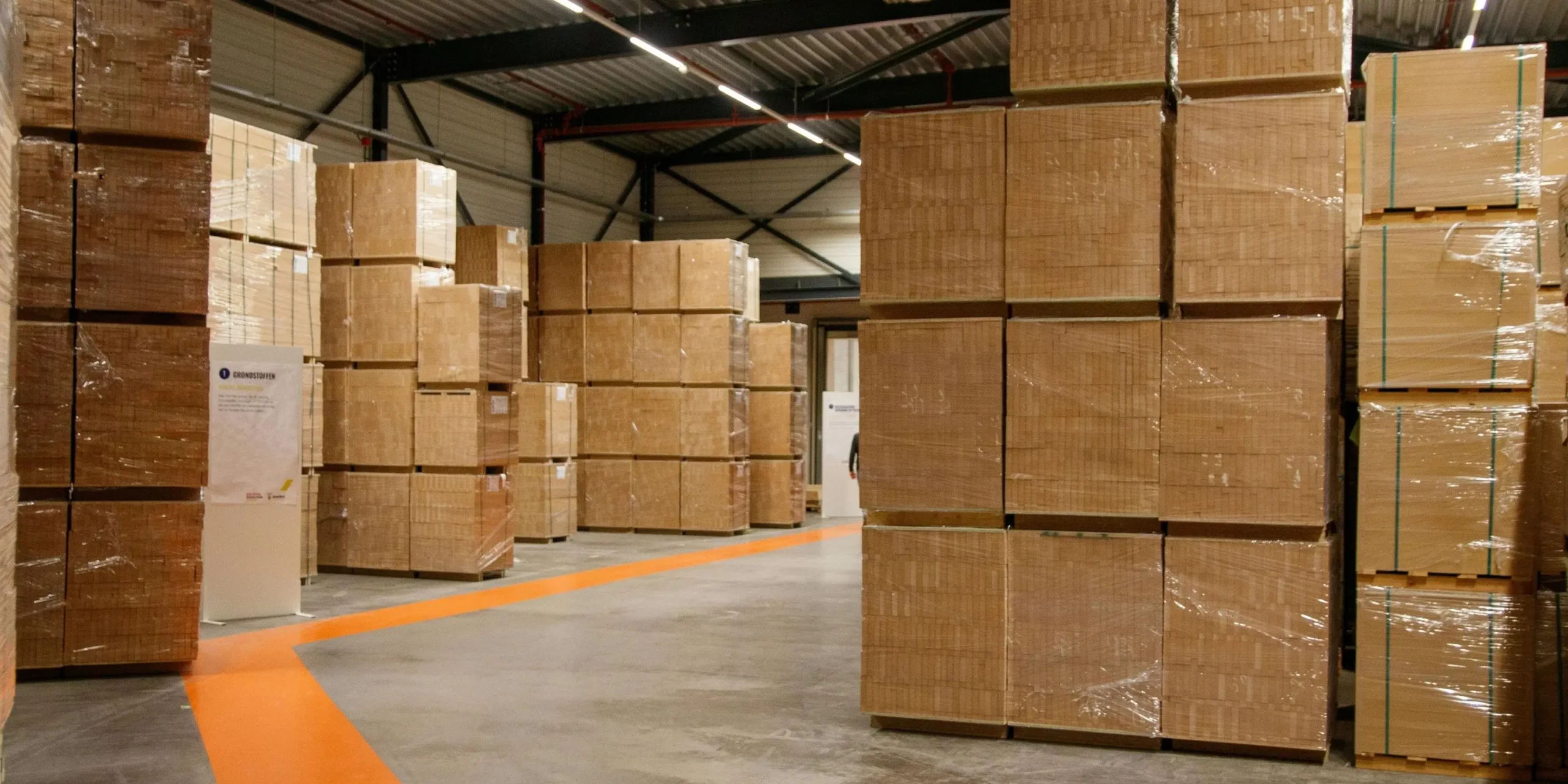
Moving heavy pallets of finished food products or raw ingredients across large facilities is labor-intensive and poses consistent safety risks. In the Food and Beverage (F&B) industry, where high throughput and strict safety standards are non-negotiable, relying on manual forklift operations introduces variables that can hinder efficiency.
Transitioning to a robotic intralogistics model allows facilities to modernize internal transport, eliminate human error, and achieve continuous floor operations.
Architecture of Autonomous Pallet Routing
To shift from manual material handling to a fully automated system, the infrastructure must combine autonomous physical transport, intelligent spatial awareness, and mobile management interfaces.
1. Autonomous Transport: Dynamic Navigation Without Floor Tape 
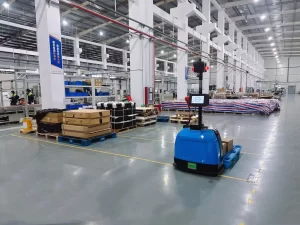
Traditional automated guided vehicles (AGVs) historically required magnetic tape or painted lines on the floor to navigate. Modern logistics demands higher flexibility.
The implementation of Autonomous Mobile Robots (AMRs), such as the FT1500 and FT2000 models, removes the need for physical guidance infrastructure.
-
Dynamic Path Planning: These AMRs use advanced mapping algorithms to learn the facility layout. If an aisle is blocked, the robot autonomously calculates the most efficient alternative route in real time.
-
Payload Management: Designed to replace traditional forklifts, they can carry heavy payloads of raw materials or finished pallets directly from the end of the production line to designated staging or storage bays.
2. Active Collision Avoidance: Multi-Sensor Safety Arrays
F&B warehouses are highly dynamic environments where human workers, manual equipment, and robot fleets must coexist safely.
To maintain high-speed operations without risking injuries or product damage, AMRs utilize built-in distance sensors, including LiDAR and ultrasonic technologies.
-
360-Degree Awareness: These sensors constantly sweep the environment. If a box falls off a pallet onto the path or a worker steps in front of the machine, the sensors trigger a calculated stop or bypass sequence.
-
Fail-Safe Operation: By relying on edge detection rather than centralized commands for safety, response times are kept to milliseconds, effectively eliminating the risk of industrial collisions.
3. Fleet Management and Supervision: Ruggedized Portability 
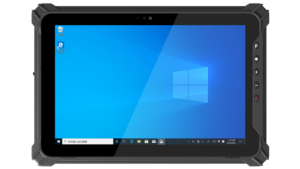
While the AMRs operate autonomously, facility managers require constant visibility into system performance without being tethered to a desktop in a control room.
Equipping floor managers with rugged tablet PCs, such as the I17J, allows them to monitor operations while walking the facility.
-
Telemetrics in Real Time: Managers can view the exact position of every robot, monitor battery levels, and assign or reprioritize tasks directly from the floor.
-
Industrial Resilience: F&B environments often involve dust, humidity, and temperature drops near cold storage. Standard commercial tablets fail rapidly in these conditions; the I17J is engineered to withstand the thermal and physical shocks inherent to heavy industrial use.
Key Advantages of AMR Integration
Deploying an autonomous pallet routing system, accessible through automation partners like Logicbus, yields immediate operational returns:
-
Drastic Reduction in Labor Costs: Automating low-value, repetitive transport tasks allows facilities to reallocate labor to complex roles like quality control, picking, and management.
-
Eradication of Forklift Accidents: Manual forklift operation remains one of the leading sources of injury in warehousing. Transitioning to AMRs with deterministic safety protocols eliminates human-driven driving errors.
-
24/7 Operational Uptime: High-volume F&B plants require constant output. AMRs do not require shift breaks and can utilize opportunity charging (charging during idle moments) to maintain continuous 24-hour operations.
Conclusion
Autonomous pallet routing is no longer a concept of the future; i t is a mechanical necessity for modern high-volume F&B plants. By replacing manual workflows with AMRs like the FT1500/FT2000 and utilizing robust monitoring tools like the I17J rugged tablet, manufacturers can secure a safer, more predictable, and highly scalable operation.




sales@logicbus.com | support@logicbus.com | +1 619 616 7350 | Start conversation