


In industrial bakeries, breweries, and sauce manufacturing, the consistency of product flavor and texture depends entirely on the exact proportion of raw materials. Manual weighing is the primary source of variance and waste in these sectors. Automating the batching process from ingredient silos to mixing tanks is the only way to ensure strict recipe adherence while maintaining the high throughput required by modern production lines.
1. The Engineering of Precise Measurement
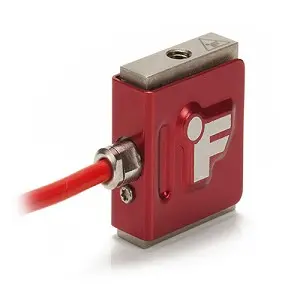
The foundation of automated batching is real-time gravimetric data. Unlike volumetric dosing (which can be affected by temperature and aeration), weighing provides an absolute mass measurement.
-
S-Type Load Cell Integration: High-precision sensors, such as the LSB201 series, are installed beneath mixing tanks and ingredient silos. These sensors utilize a strain gauge bridge to convert the physical weight of liquids and powders into electrical signals.
-
Real-Time Monitoring: As ingredients are dispensed, the system monitors the weight change (loss-in-weight or gain-in-weight). The LSB201 series is specifically chosen for its high accuracy and ability to handle both tension and compression, making it ideal for suspended tanks.
2. Human-Machine Interface (HMI) for Harsh Environments
The Food & Beverage (F&B) industry presents a unique challenge: the need for high-tech control in environments that require aggressive “washdowns” with high-pressure water and chemical sanitizers.
-
Industrial All-in-One Panel PC: Operators manage daily recipes via a stainless-steel TCP-DRS156T Industrial Panel PC. Its NEMA 4X/IP66-rated enclosure allows it to withstand daily sanitation cycles without compromising the electronics.
-
Ruggedized Input Peripherals: Traditional office peripherals would fail instantly in these conditions. To ensure 100% uptime, operators utilize fully sealed, waterproof hardware:
-
D-87w Industrial Keyboard: A silicone-covered, washable keyboard that prevents bacterial growth in the gaps between keys.
-
D-SME20 Industrial Mouse: An optical mouse designed for heavy washdown environments, ensuring precise navigation even with gloved hands.
-
3. Supervision, Control, and Traceability
The batching process is orchestrated by a central control layer, typically a PLC (Programmable Logic Controller) integrated with SCADA (Supervisory Control and Data Acquisition) software.
-
Recipe Management: The SCADA system stores “Master Recipes.” When an operator selects a batch, the software automatically triggers the valves and feeders, stopping them the millisecond the load cells reach the setpoint.
-
Compliance and Logging: Every gram of material added is recorded. This creates a “digital birth certificate” for every batch, which is critical for food safety audits (FSMA/GFSI) and batch-to-batch consistency analysis.
4. Technical and Operational Benefits
| Feature | Technical Impact | Business Outcome |
| High-Precision Sensors | Eliminates dosing errors of $\pm 2-5\%$. | Guaranteed uniform flavor and consistency. |
| IP66/IP69K Hardware | Prevents water ingress and equipment failure. | Maintenance of strict hygiene and food safety standards. |
| Automated Setpoints | Prevents over-pouring and material waste. | Direct reduction in raw material costs (COGS). |
Conclusion
Automated recipe batching is more than just a labor-saving measure; it is a quality assurance system. By integrating high-precision weighing hardware with washdown-ready computing interfaces, manufacturers can scale their production while guaranteeing that the millionth batch tastes exactly like the first.




sales@logicbus.com | support@logicbus.com | +1 619 616 7350 | Start conversation