


In today’s industrial environment, automation is the backbone that keeps processes running smoothly. However, electrical failures and voltage spikes constantly threaten the integrity of these critical systems. Early detection and prevention of these anomalies are key to protecting equipment, ensuring operational continuity, and complying with industrial safety standards. In this blog, we explore how advanced electrical anomaly detection becomes an indispensable tool in industrial automation.
Why is early detection of electrical failures critical?
Sudden voltage variations, power drops, harmonics, or transients can severely damage sensitive components like PLCs, motors, sensors, and control systems. Beyond physical damage, these events cause unexpected downtime that impacts productivity and results in high maintenance costs.
Implementing continuous monitoring and predictive analytics not only helps identify anomalies before they escalate into serious failures but also supports compliance with international standards such as IEC 61000, ISO 50001, and NFPA 70E, which govern electrical power quality and industrial safety.
How does an advanced electrical failure detection system work?
1. Continuous Electrical Monitoring
Industrial-grade sensors like the T201DCH600-MU and analyzers such as the S711EROGMOD30 are installed at strategic points in the power distribution system — control cabinets, PLC FBs-60MCR2-AC, and high-demand equipment. These devices measure voltage, current, harmonics, and frequency stability in real time.
2. Anomaly Detection and Real-Time Analysis
Using predefined thresholds and pattern recognition, the system detects anomalies like voltage dips, short transients, or overloads. Each event is logged with details — anomaly type and timestamp — for immediate diagnostics.
3. Alarm and Event Notification
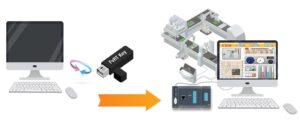
Upon detecting a failure or spike, the PLC FBs-60MCR2-AC triggers local visual and acoustic alarms and sends automatic notifications via FATEK’s SCADA FvRT system or email/SMS to maintenance personnel, enabling quick and effective response.
4. Data Logging and Historical Analysis
All events are stored centrally for long-term analysis. This helps identify recurring patterns to support root cause analysis and infrastructure improvement planning.
5. Integration with Asset Protection Strategies
The system can automatically initiate shutdowns or load shedding to protect sensitive devices and integrates with emergency protocols and power redundancy management.
Key benefits for industry
Proactive Failure Detection: Minimizes damage by identifying anomalies before they impact operations.
Reduced Downtime and Costs: Prevents unplanned outages and costly repairs through preventive maintenance.
Regulatory Compliance: Ensures adherence to current electrical safety and power quality standards.
Real-Time Alerts: Provides immediate visibility for fast incident management.
Data-Driven Decisions: Enables informed infrastructure upgrades and maintenance planning.
Scalability and Integration: Compatible with existing PLCs, SCADA, and energy management systems.
Early detection of electrical failures in automated systems is a strategic priority for any industrial plant. By leveraging intelligent technologies that combine precision sensors, predictive analytics, and instant communication, you protect your assets, improve productivity, and enhance safety in your industrial environment.
If you want to learn how to implement these solutions in your production process, contact us. At Logicbus, we provide cutting-edge technology and expert consulting to take your automation to the next level.




sales@logicbus.com | support@logicbus.com | +1 619 616 7350 | Start conversation