


In pharmaceutical packaging lines, the clarity of glass vials while essential for product inspection presents a significant technical challenge for automated sensors. Verifying the presence of transparent labels and the accuracy of the Pharmacode is a high-stakes task where traditional sensing methods often fall short.
A failure to detect a missing or incorrect label can lead to costly product recalls and severe regulatory penalties. To address this, specialized industrial automation solutions provide a fail-safe method for high-speed validation.
Technical Architecture: The Three-Stage Verification Process
Achieving 100% inspection at mass-production speeds requires a dedicated workflow that combines specialized optical sensing with high-speed logic processing.
1. Detection of Transparent Media 
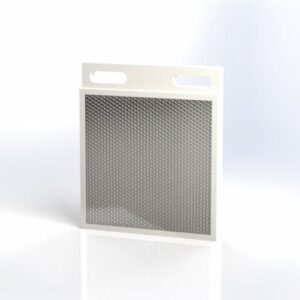
The first challenge is identifying the vial itself. Standard photoelectric sensors often struggle with “burn-through” on glass. We utilize the RSR-1 retroreflective photoelectric sensor, specifically designed for transparent objects, in tandem with an AR51 reflector. This combination ensures a stable detection signal by monitoring the interruption of the light beam, providing a reliable trigger for the subsequent inspection steps.
2. Precision Pharmacode Validation
Once the vial’s presence is confirmed, the system must verify the label’s identity. The MEP45WLCF4 registration mark sensor, equipped with advanced fiber optics, is deployed to detect the Pharmacode. Fiber optic technology allows for a concentrated sensing beam, enabling the system to read narrow pharmaceutical barcodes even on curved surfaces or at high speeds where standard sensors would lose focus.
3. Logic-Driven Rejection and Integration
The data from these sensors is processed by the FATEK FBS-20MCR2-AC PLC. This controller operates as the central intelligence of the line. If the PLC receives a “presence” signal from the RSR-1 but fails to receive a “valid code” signal from the MEP45WLCF4, it triggers an immediate rejection sequence. The defective vial is ejected from the conveyor before it can reach the final cartoning stage, ensuring only fully compliant products leave the facility.
Strategic Advantages for Pharma Manufacturers
Integrating specialized sensing technology into the packaging line offers three primary benefits:
-
Reliability Over Traditional Sensors: The RSR-1 and fiber-optic MEP45WLCF4 eliminate the “false passes” commonly associated with standard sensors when dealing with transparent or reflective materials.
-
Regulatory Compliance: This automated workflow provides a robust audit trail and ensures strict adherence to global labeling regulations, significantly reducing the risk of product recalls.
-
High-Throughput Compatibility: Designed for mass-production environments, the system maintains its accuracy without requiring a reduction in line speed, maximizing overall equipment effectiveness (OEE).
Conclusion
In an industry where precision is non-negotiable, the ability to “see the invisible” is a competitive necessity. By leveraging specialized sensors for transparent objects and high-speed fiber optics, pharmaceutical companies can guarantee the integrity of every vial that leaves the line.




sales@logicbus.com | support@logicbus.com | +1 619 616 7350 | Start conversation