


Deterministic, Non-Destructive Container Closure Integrity Testing for Pharmaceutical Manufacturing
Once a pharmaceutical product is sealed in a blister pack or vial, ensuring container closure integrity (CCI) becomes a critical quality attribute. The primary function of the packaging system is to maintain sterility, preserve product efficacy, and protect patient safety throughout the product’s shelf life.
Failures in hermetic sealing can result in:
-
Microbial ingress
-
Moisture contamination
-
Oxidation or degradation of active pharmaceutical ingredients (APIs)
-
Reduced product potency
-
Regulatory non-compliance
Traditional destructive methods such as dye ingress testing have long been used to evaluate seal integrity. However, these methods are slow, subjective, generate material waste, and are not suitable for modern high-throughput production environments.
Today, deterministic, non-destructive vacuum and pressure decay testing methods are widely adopted across the U.S. pharmaceutical industry and aligned with USP <1207> Container Closure Integrity Testing guidance.
Regulatory Framework and Industry Alignment 

Container closure integrity testing is governed by:
-
USP <1207> – Container Closure Integrity Testing
-
FDA expectations for deterministic test methods
-
21 CFR Part 11 – Electronic records and signatures
USP <1207> promotes deterministic methods over probabilistic methods such as dye ingress because deterministic technologies provide:
-
Quantitative results
-
Higher sensitivity
-
Improved reproducibility
-
Reduced operator dependency
Vacuum and pressure decay testing are recognized deterministic methods suitable for blisters, vials, ampoules, and other sealed pharmaceutical containers.
System Architecture for Hermetic Seal Integrity Testing
This application implements a precision-controlled vacuum or pressure decay leak detection system designed for cleanroom pharmaceutical environments.
1. Test Chamber
The blister pack or vial is placed inside a sealed test chamber engineered for repeatability and pressure stability.
A precision pneumatic control system generates a highly stable and repeatable vacuum or pressure profile. Key characteristics include:
-
Controlled evacuation or pressurization ramp
-
Stabilization phase to eliminate transient disturbances
-
Defined measurement window
-
Controlled return-to-atmosphere sequence
Mechanical repeatability is essential to ensure that pressure variations detected during testing are attributable to leaks, not system instability.
2. Leak Detection Mechanism
Leak detection is based on monitoring minute pressure changes within the sealed chamber.
A high-sensitivity differential pressure transducer continuously monitors pressure variations during the measurement phase.
If a micro-leak exists:
-
Air escapes from the blister or vial
-
Pressure equilibrium shifts
-
A measurable pressure change occurs
Even microscopic leaks on the order of microns produce detectable pressure variations when measured with sufficient resolution and stability.
The method is:
-
Non-destructive
-
Quantitative
-
Repeatable
-
Operator-independent
3. High-Resolution Data Acquisition 
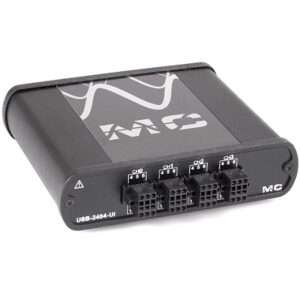
Pressure decay signals are extremely small and can be affected by:
-
Ambient temperature fluctuations
-
Mechanical vibration
-
Pneumatic instability
-
Electrical noise
To reliably detect true leaks, the system incorporates a 24-bit high-resolution DAQ module 6069-410-035.
This high-resolution data acquisition module provides:
-
High signal-to-noise ratio
-
Microvolt-level signal discrimination
-
Stable long-duration sampling
-
Accurate detection of minute pressure differentials
The 24-bit architecture is critical to distinguish:
-
Real leak signatures
-
Environmental drift
-
Mechanical settling effects
Without sufficient resolution, false positives or false negatives may compromise quality assurance.
4. Results Management and Traceability
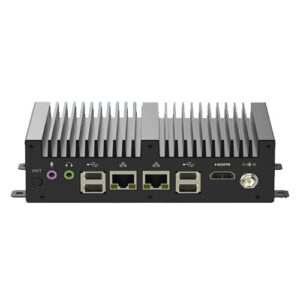
All system functions are managed by a rugged, fanless industrial Mini PC TBOX-1720.
This industrial PC performs:
-
Test sequence control
-
Pass/fail algorithm execution
-
Storage of test parameters
-
Batch-level data logging
-
Generation of quality reports
Fanless architecture offers critical advantages in cleanroom and packaging environments:
-
No particle generation from cooling fans
-
Improved reliability
-
Reduced maintenance
-
Lower contamination risk
The system supports electronic record management aligned with 21 CFR Part 11 requirements, including:
-
Secure data storage
-
Controlled user access
-
Audit trail capability
-
Electronic signature integration
Traceability is fundamental in pharmaceutical manufacturing. Each test cycle can be linked to:
-
Batch ID
-
Operator ID
-
Timestamp
-
Test parameters
-
Final result
Key Benefits for Pharmaceutical Manufacturing
Non-Destructive Testing
Vacuum and pressure decay methods allow inspection of a significantly higher percentage of production output compared to destructive tests.
Benefits include:
-
Reduced product waste
-
Lower operational cost
-
Increased sampling frequency
-
Potential for 100% inspection in critical applications
Ultra-High Sensitivity
The combination of:
-
Precision pneumatic control
-
High-sensitivity differential pressure sensors
-
24-bit DAQ technology
Enables detection of microscopic leaks that are invisible to visual inspection or dye methods.
This enhances patient safety and product protection throughout shelf life.
Regulatory Alignment
The system aligns with:
-
USP <1207> deterministic testing recommendations
-
FDA expectations for quantitative integrity testing
-
21 CFR Part 11 data integrity requirements
Deterministic testing strengthens regulatory defensibility during inspections and audits.
Industrial Robustness
The TBOX-1720 fanless industrial PC ensures long-term reliability in:
-
Cleanroom environments
-
Secondary packaging areas
-
High-throughput pharmaceutical lines
Industrial-grade components are designed for continuous operation and reduced downtime.
Scalable and Automatable
The system architecture supports:
-
Standalone quality inspection stations
-
Semi-automatic test benches
-
Fully automated integration into packaging lines
It can be deployed:
-
In R&D environments
-
During validation phases
-
In commercial-scale pharmaceutical manufacturing
Automation-ready design enables seamless integration with:
-
PLC systems
-
MES platforms
-
Centralized quality databases
Strategic Importance of Deterministic CCI Testing
Container closure integrity is not simply a packaging parameter it is a critical quality attribute directly linked to product safety and regulatory compliance.
Non-destructive vacuum and pressure decay methods represent the industry shift toward:
-
Quantitative validation
-
Higher sensitivity
-
Real-time quality control
-
Data-driven compliance
By combining precision leak detection, high-resolution data acquisition, and industrial-grade computing, pharmaceutical manufacturers can significantly reduce risk while improving operational efficiency and regulatory readiness.
Hermetic seal integrity testing is no longer just a quality control step it is a strategic safeguard for patient safety and brand protection.




sales@logicbus.com | support@logicbus.com | +1 619 616 7350 | Start conversation