


In industries such as food and beverage, pharmaceuticals, cosmetics, and chemicals, precise liquid filling into bottles or containers is not just a production step—it’s essential for ensuring product quality, cost efficiency, and regulatory compliance. This article explores how automated filling systems using advanced sensors, PLCs, and dosing technology can optimize this critical process.
What Is This Application About?
This automated system manages and supervises the precise dispensing of liquid products into bottles or containers. It combines intelligent sensors, dosing valves, pumps, and programmable logic controllers (PLCs) to deliver hygienic, accurate, and repeatable filling operations. The system supports quick product changes, recipe management, and full batch traceability—making it ideal for modern, high-mix production environments.
How It Works
1. Bottle Detection and Positioning
As bottles or containers arrive at the filling station, photoelectric or laser sensors—such as the SmartEye RSRC-1 from Tri-Tronics—detect their presence and alignment. Once the container is in position, the Fatek FBs-20MCR2-AC PLC triggers the filling sequence.
2. High-Precision Liquid Filling
Depending on your process configuration, filling can be achieved via: 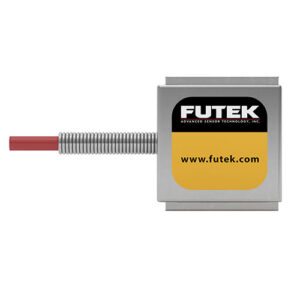
-
Gravimetric Filling: Using Futek’s LSB200 S-Type Load Cells, the container is placed on a precision scale, and liquid is dispensed until the desired weight is reached.
-
Volumetric Filling: With capacitive sensors like the Rechner KA1719, the system measures the exact volume of liquid being filled.
The PLC precisely controls the valve opening time and flow rate, dynamically adjusting for factors such as viscosity, temperature, and product type.
3. Tolerance Verification and Reject Handling
Each filled container is verified to be within an acceptable range (e.g., ±0.5% of the target volume/weight). Any unit outside tolerance is flagged or automatically diverted via pneumatic actuators for reinspection or disposal.
4. Recipe Management and Batch Control
Operators use the HMI P5070SB to select and configure product-specific filling parameters, such as fill volume, valve timing, delay intervals, and purge cycles. Recipes are stored digitally and can be traced by batch ID or operator login for quality and compliance purposes.
5. Data Logging and Compliance
All critical process data—fill weight, volume, time stamps, product IDs—is logged and can be exported for quality assurance and regulatory documentation (e.g., GMP, FDA 21 CFR Part 11).
Key Benefits
-
High Accuracy and Repeatability: Achieve consistent fill volumes with minimal overfill, reducing waste and increasing quality.
-
Flexible for Multiple Products: Easily switch between different bottle sizes, volumes, and product types with recipe-based control.
-
Full Compliance and Traceability: Generate and store complete audit trails with batch records, fill metrics, and operator actions.
-
Reduced Waste and Downtime: Intelligent valve control and in-process correction reduce material loss and downtime.
-
Scalable and Integrable: Compatible with upstream/downstream systems like capping, labeling, and packaging. Supports Industry 4.0 standards.
-
Remote Monitoring and Control: Integration with SCADA systems allows real-time monitoring of fill rates, efficiency, and alarms from anywhere.
Conclusion
Automating your liquid filling process ensures accuracy, compliance, and operational efficiency. By integrating high-performance components like the SmartEye RSRC-1, Futek LSB200 load cells, Rechner KA1719 capacitive sensors, Fatek FBs-20MCR2-AC PLC, and the P5070SB HMI, your production line can reach new levels of reliability and adaptability.
Looking to implement a smart liquid filling control system?
At Logicbus, we offer the technology and expertise to help you streamline your production process with precision automation.




sales@logicbus.com | support@logicbus.com | +1 619 616 7350 | Start conversation