


Ensuring Environmental Integrity Through Intelligent Monitoring
Air whether introduced from outdoors or recirculated internally carries biological, chemical, and physical contaminants. In controlled environments such as cleanrooms, these contaminants can compromise product quality, patient safety, regulatory compliance, and process stability.
Industries such as technology and electronics manufacturing, healthcare and pharmaceuticals, aerospace and automotive, as well as food and cosmetics production, rely on cleanrooms where airborne particulate concentration, temperature, humidity, and pressure differentials are maintained within strict limits.
In this context, HVAC systems are not simply comfort systems they are critical process infrastructure. Implementing predictive maintenance strategies in HVAC systems is essential to ensure cleanroom performance, avoid costly failures, and maintain regulatory compliance.
The Role of HVAC Systems in Cleanroom Performance
Cleanrooms operate under carefully engineered environmental control strategies. The HVAC system is responsible for maintaining:
1. Controlled Airflow and Cleanliness
Air must be supplied in sufficient volume and cleanliness to achieve and sustain the required ISO classification. Air change rates (ACH) are determined by cleanroom class and process sensitivity.
2. Proper Air Distribution
Air introduction must prevent stagnant zones where particulate accumulation can occur. Laminar or turbulent flow patterns are engineered depending on the classification level and process requirements.
3. High-Efficiency Filtration
Outdoor and recirculated air must pass through HEPA (High-Efficiency Particulate Air) filters to remove submicron particles. HEPA integrity and loading condition directly affect cleanroom classification compliance.
4. Temperature and Humidity Control
Temperature and relative humidity affect:
-
Electrostatic discharge risk
-
Microbial growth potential
-
Product stability
-
Worker comfort
Precise environmental conditioning ensures process repeatability and regulatory compliance.
5. Positive Pressurization
Cleanrooms typically operate under positive pressure relative to adjacent areas to prevent infiltration of contaminants. Maintaining stable pressure differentials requires continuous monitoring and controlled makeup air supply.
Why Predictive Maintenance is Critical in Cleanroom HVAC Systems
Traditional preventive maintenance schedules (e.g., filter replacement every X months) are insufficient in critical cleanroom environments. HVAC system degradation can occur due to:
-
Gradual HEPA filter loading
-
Fan motor bearing wear
-
Damper malfunction
-
Coil fouling
-
Sensor drift
-
Pressure imbalance
-
Duct leakage
A failure in any of these components may lead to:
-
Cleanroom classification loss
-
Production shutdown
-
Batch rejection
-
Regulatory non-compliance (FDA, ISO 14644, GMP)
-
Significant financial losses
Predictive maintenance uses real-time environmental and equipment data to detect degradation trends before failure occurs.
Environmental Monitoring as the Foundation of Predictive Maintenance 
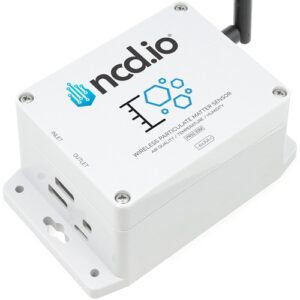
To prevent external contaminants from entering controlled environments, the device model PR52-33M_PWR_MK continuously monitors incoming air conditions by detecting:
-
Particulate matter (PM1, PM2.5, PM10)
-
Relative humidity
-
Temperature
This real-time monitoring provides insight into external air quality conditions that could affect:
-
Filter loading rates
-
HVAC energy demand
-
Cleanroom pressure stability
-
Contamination risk levels
The device records environmental data and transmits it to PR55-34M via Modbus RTU, enabling integration with PLCs, SCADA systems, and data acquisition platforms.
This architecture allows environmental variables to become actionable data rather than passive measurements.
Data Integration Through Modbus RTU
Using Modbus RTU ensures industrial-grade reliability and compatibility with:
-
PLC control systems
-
SCADA platforms
-
Building Management Systems (BMS)
-
Data acquisition systems
Through this integration, facility engineers can:
-
Trend particulate concentration over time
-
Correlate filter differential pressure with PM load
-
Monitor seasonal external air variability
-
Predict maintenance intervals dynamically
-
Trigger alarms based on deviation thresholds
Instead of replacing filters based solely on time intervals, maintenance decisions can be based on real contamination load and system performance.
Monitoring Systems and Operational Visibility
Monitoring systems serve as the operational intelligence layer of cleanroom HVAC management.
When connected to supervisory platforms, the system can:
-
Verify positive pressure differentials
-
Confirm temperature and humidity compliance
-
Identify abnormal particulate spikes
-
Detect environmental drift outside ISO tolerance
-
Log data for audits and validation processes
Routine recording of control data is not optional in regulated industries. It supports:
-
GMP documentation
-
ISO 14644 compliance verification
-
FDA audit readiness
-
Root cause analysis in deviation events
Without historical data, predictive maintenance is impossible.
Predictive Maintenance Strategy for Cleanroom HVAC
An effective predictive maintenance strategy should include:
1. Continuous Environmental Monitoring
Real-time particulate, humidity, and temperature tracking at air intake and within critical zones.
2. Differential Pressure Monitoring
Tracking filter loading trends to predict optimal replacement timing.
3. Equipment Condition Monitoring
Monitoring:
-
Fan motor vibration
-
Power consumption trends
-
Airflow velocity
-
Damper position stability
4. Data Trending and Threshold Management
Implementing alarm thresholds based on statistical deviation rather than fixed values reduces false alarms and improves reliability.
5. Integration with Maintenance Management Systems
Connecting environmental data to CMMS platforms enables predictive work order generation.
Application Benefits
Business Continuity
Predictive maintenance reduces unexpected HVAC failures, preventing:
-
Cleanroom downtime
-
Production interruptions
-
Product loss
-
Regulatory penalties
Early detection allows corrective actions before environmental deviation impacts operations.
Extended Equipment Life
Monitoring enables operation within optimal ranges, preventing:
-
Overloaded fans
-
Excessive filter stress
-
Coil icing or fouling
-
Motor overheating
This extends asset lifecycle and reduces capital expenditure.
Accurate and Reliable Data
MadgeTech loggers are designed to operate under vacuum and extreme temperatures where conventional sensors may fail. Reliable data acquisition ensures accurate environmental validation in demanding cleanroom applications.
Strategic Value of Predictive HVAC Maintenance in Cleanrooms
In highly regulated industries, HVAC systems are mission-critical assets. Cleanroom environmental stability directly impacts:
-
Product quality
-
Patient safety
-
Regulatory compliance
-
Brand reputation
-
Operational profitability
Predictive maintenance transforms HVAC management from reactive to proactive. By leveraging real-time particulate monitoring, environmental sensors, and industrial communication protocols such as Modbus RTU, facilities can maintain cleanroom integrity while optimizing maintenance resources.
In modern cleanroom environments, environmental monitoring is no longer just compliance-driven it is a strategic operational necessity.




sales@logicbus.com | support@logicbus.com | +1 619 616 7350 | Start conversation