


In the yarn spinning industry, maintaining precise and consistent tension is not just a technical detail—it’s a cornerstone of quality. Inconsistent tension can cause serious defects such as uneven yarn thickness, frequent breakage, and improper winding. These issues don’t just affect the spinning stage; they also create cascading problems in downstream processes like weaving, knitting, and dyeing.
By integrating advanced sensing technology, PLC-based control, and real-time data visualization, manufacturers can ensure optimal yarn tension, improve efficiency, and significantly reduce waste.
How the System Works
1. Real-Time Tension Measurement
Force Sensors Installation
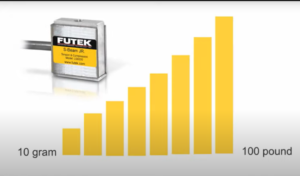
High-precision S-type load cells such as the FUTEK LSB200 are strategically installed along the yarn path, typically between the drafting system and the take-up rollers. These sensors continuously measure the force exerted on the yarn, instantly detecting any deviation from the optimal tension range.
Signal Conditioning
The raw analog signals from the LSB200 are processed through FUTEK FSH03863 signal converters, which amplify and filter the data for clean, accurate transmission to the control unit.
2. Data Acquisition and PLC Control
A Fatek FBs-20MCR2-AC PLC, equipped with analog modules like the FBs-6AD, receives the conditioned tension signals. The PLC continuously compares real-time measurements with preset target values.
Whenever tension exceeds or drops below the acceptable range, the PLC automatically adjusts roller speeds, brake pressure, or motor torque—bringing tension back within the ideal window without interrupting production.
3. Visualization and Manual Adjustment
Operators interact with the system via an HMI panel P5070SB, connected to the PLC through an FBs-CBEH(8) Ethernet module. This interface allows them to:
-
View live tension data in real time.
-
Switch between different yarn types or production recipes.
-
Manually override automated settings for calibration or troubleshooting.
4. Alerts and Quality Assurance
The system is programmed to trigger alarms when tension values move critically out of range, enabling quick intervention before defects occur. Additionally, all tension data is logged, providing complete batch traceability for quality audits and continuous process improvement.
Key Benefits
-
Consistent Yarn Quality – Maintains optimal tension for uniform thickness and strength.
-
Reduced Material Waste – Prevents thread breakage and production stoppages.
-
Automated Control – Minimizes manual adjustments, increasing throughput.
-
Flexibility – Easily adapts to different yarn types, speeds, and production setups.
-
Enhanced Process Monitoring – Full visibility into key parameters with traceable records.
Conclusion
Tension control in yarn spinning is more than a safeguard—it’s a performance driver. By combining FUTEK load cells, Fatek PLCs, and real-time monitoring tools, textile manufacturers can achieve higher product quality, lower waste, and more stable operations. The result is a production line that’s not only more efficient but also more reliable in meeting the high standards of today’s textile market.




sales@logicbus.com | support@logicbus.com | +1 619 616 7350 | Start conversation