


In the food processing industry, particularly within industrial bakeries and protein processing, there is no margin for error when it comes to the “kill step.” Whether you are running continuous baking ovens, roasting lines, or industrial fryers, ensuring that your product reaches the correct internal temperature for the required duration is critical. It is the dividing line between a safe, high-quality product and a potential food safety hazard.
However, relying solely on the oven’s air temperature settings is not enough. To truly validate the pasteurization or cooking process, you need precise Thermal Profiling. Today, we look at how combining robust data logging with advanced automation hardware ensures compliance, consistency, and efficiency.
What is Thermal Profiling?
Thermal profiling is the process of mapping the temperature of a product as it moves through a heating cycle. In continuous processing, this validates that the product’s core temperature has reached the critical limit necessary to eliminate pathogens (such as Salmonella or Listeria).
This process transforms a “blind” cooking method into a data-driven science, ensuring that every batch meets specific Lethality standards while preventing the quality issues associated with over-cooking.
The Technology: How It Works
To achieve a comprehensive view of the thermal process, we utilize a dual approach: In-transit Profiling for validation and Real-time Monitoring for process control.
1. In-Transit Profiling (The Traveling Logger)
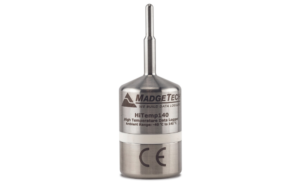
For deep validation, a ruggedized data logging assembly travels through the oven or fryer alongside the product.
-
The Hardware: We utilize the MadgeTech HiTemp140-PT, a high-temperature data logger rated for up to 140°C. To survive the extreme conditions of an industrial oven, this logger is encased in a HiTemp140-TS thermal barrier.
-
The Method: Probes from the logger are inserted directly into the core of the food product. The entire assembly moves along the conveyor belt, recording the exact thermal journey of the product from entry to exit.
-
The Result: This provides an exact “fingerprint” of the thermal energy the product actually absorbed, rather than just the ambient temperature of the oven.
2. Real-Time Process Monitoring (Non-Invasive)
While the traveling logger is excellent for periodic validation, operators need eyes on the process continuously.
-
The Integration: Using non-invasive sensors like the PM2.2-251-HT-CB, we can capture temperature data via a 4-20 mA output.
-
The Control Loop: This signal is fed into a FATEK FBs-B2A1D module, integrated directly into a FATEK FBS-10MAJ2-AC PLC.
-
Visualization: The PLC transmits this data to a robust industrial computer (such as the CV-115R-P1101-N42-4G-500G-GST60). This allows line operators to monitor thermal fluctuations in real-time, ensuring the process remains stable between validation runs.
Data Analysis and Compliance 
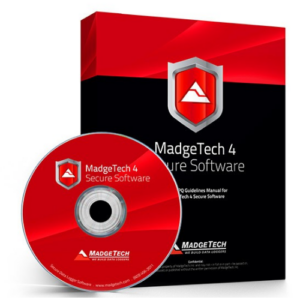
Collecting the data is only half the battle; interpreting it is where the value lies. Upon retrieving the MadgeTech logger, the data is downloaded into MadgeTech 4 software.
This software doesn’t just show a graph; it performs complex calculations to determine Lethality (F-value) and Pasteurization Units (PU). The system automatically analyzes the time-temperature curve to provide a clear Pass/Fail result based on your specific food safety standards. This generates a time-stamped, unalterable report that serves as a permanent verification record.
Why This Matters: Key Benefits
Implementing this level of thermal validation offers significant advantages for industrial food manufacturers:
-
HACCP Compliance: It scientifically validates the “kill step,” creating a robust Critical Control Point (CCP) record required for HACCP, BRC, and SQF audits.
-
Product Quality Consistency: By knowing exactly what is happening inside the product, you can eliminate the guesswork that leads to burnt crusts or undercooked centers.
-
Energy Efficiency: Many facilities over-cook products “just to be safe.” Precise profiling allows you to optimize oven dwell times and temperatures, reducing energy consumption without compromising safety.
-
Audit Readiness: With automated report generation, your facility is always ready for inspection with permanent, auditable data.
Conclusion
In modern food manufacturing, “setting and forgetting” oven temperatures is a practice of the past. By integrating rugged data loggers with sophisticated PLCs and industrial computing, manufacturers can ensure that every product leaving the line is safe, compliant, and cooked to perfection.




sales@logicbus.com | support@logicbus.com | +1 619 616 7350 | Start conversation