


In the high-demand world of textile manufacturing, loom machines are the heart of the operation. Their ability to function continuously and precisely is critical not only for meeting production targets but also for ensuring fabric quality. However, even minor anomalies—like thread tension fluctuations or unnoticed vibrations—can lead to serious problems, such as machine damage, product defects, and unplanned downtime. That’s why real-time monitoring of loom performance has become essential for modern textile operations.
Why Real-Time Monitoring Matters
Loom machines operate in dynamic environments where mechanical wear, tension variation, and thermal stress are constant threats. Traditional scheduled maintenance often falls short in preventing failures or ensuring optimal efficiency. Real-time monitoring provides a proactive alternative—detecting early signs of trouble and enabling predictive maintenance before a costly breakdown occurs.
1. Monitoring of Critical Parameters 
Vibration Monitoring
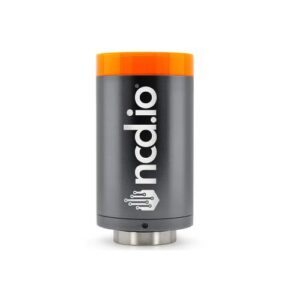
Abnormal vibrations can be a red flag for issues like misalignment, imbalance, or worn-out components. Sensors like the PR63-3A are installed on critical parts—bearings, drive shafts, motor housings—to continuously track vibration patterns. Any deviation from the baseline triggers an alert for immediate inspection.
Tension Control
Thread tension is directly tied to fabric quality. To maintain uniformity in weaving, FUTEK load cells such as the FSH03870 are placed along the yarn path, offering real-time force measurement. In cases where direct measurement isn’t feasible, torque sensors like the FSH04016 are mounted on spool motors to infer tension indirectly. Both methods ensure consistent tension and help prevent yarn breakage or slack that could ruin the fabric.
RPM and Motor Condition Monitoring
The loom’s motor speed and temperature are vital for smooth operation. Analog input modules like the SENECA K109 series capture real-time RPM, voltage, and thermal data using tachometers and thermal sensors. Monitoring these values helps detect overheating, overload, or power irregularities.
2. Data Collection and Signal Processing
All sensor data converges through an integrated acquisition system. Vibration signals from the PR63-3A pass through a PR55-34M wireless to RS-485 converter, then into a FBS-CM25 serial module. Tension signals are acquired via the FATEK FBS-2LC load cell module, and torque data passes through a FSH03863 amplifier into the FBS-4A2D analog input module.
At the core, the FATEK FBs-60MCR2-AC PLC processes the digitized data. It compares real-time measurements with operational setpoints and safety thresholds, instantly detecting anomalies such as excessive tension, vibration spikes, or abnormal RPMs.
3. Visual Interface and Alerts
Operators need intuitive access to system insights, and this is achieved through an HMI or industrial panel PC interface. The PLC communicates via an FBs-CBEH(8) board and an IES2300SL-5GT-2LV Ethernet switch to a P Series HMI or TPC-DCS215T panel PC. From this interface, users can:
-
View live RPM, vibration, and tension metrics
-
Monitor real-time status of all machine parameters
-
Receive color-coded alerts when readings deviate from safe ranges
-
Acknowledge alarms and execute manual overrides when necessary
This high level of visibility empowers operators to respond immediately to changes in machine behavior.
4. Predictive Maintenance and Reporting
Beyond real-time control, the system supports data logging to a local or cloud-based database. This historical data is crucial for identifying trends and planning preventive maintenance. Maintenance teams can analyze:
-
Progressive wear patterns
-
Efficiency loss over time
-
Root causes of past failures
Custom reports can be generated to evaluate production performance, downtime statistics, and the overall health of loom machines, supporting continuous improvement initiatives.
Key Benefits for Textile Operations
-
Minimized Downtime: Early detection of mechanical issues enables timely corrective action, avoiding unplanned outages.
-
Enhanced Fabric Quality: Consistent monitoring of thread tension and RPM ensures stable weave quality with fewer defects.
-
Longer Equipment Lifespan: Maintaining optimal operational conditions helps reduce mechanical stress and wear.
-
Predictive Maintenance: Data-driven insights facilitate smarter maintenance scheduling, reducing costs and emergencies.
-
Faster Decision-Making: Real-time data and alerts give operators the tools to act quickly and keep processes running smoothly.
Conclusion
Real-time monitoring of loom machine performance transforms textile production from reactive to proactive. By leveraging sensor technologies, smart controllers, and intuitive HMIs, manufacturers gain the visibility and control needed to ensure quality, reduce costs, and maximize uptime. As demand for precision and efficiency grows in the textile industry, adopting intelligent monitoring systems is no longer optional—it’s a competitive necessity.




sales@logicbus.com | support@logicbus.com | +1 619 616 7350 | Start conversation