


Airports around the world are under constant pressure to move baggage and air cargo faster, safer, and with fewer operational errors. Ground handling operations particularly the transport of Unit Load Devices (ULDs) and passenger baggage from terminals to aircraft are critical bottlenecks where inefficiencies quickly translate into delays and increased costs. Autonomous logistics technologies are now redefining this process, bringing intelligence, precision, and automation to airport ground operations.
Optimizing Baggage and Cargo Flow on the Ramp
Modern autonomous ground handling systems focus on streamlining the movement of cargo containers and baggage between warehouses, sorting areas, and aircraft loading zones. By combining autonomous mobile robots, advanced sensing technologies, and industrial computing platforms, airports can significantly improve throughput while minimizing human intervention in high-risk areas.
How the System Works
Autonomous Transport with AMRs 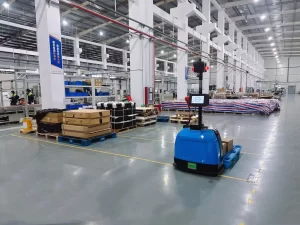
In cargo warehouses and logistics zones, Autoxing FT Series Autonomous Mobile Robots (AMRs) are deployed to transport cargo pallets and ULDs without the need for drivers. These robots navigate autonomously, using onboard intelligence to move safely through dynamic environments, avoiding obstacles while delivering cargo directly to ramp loading areas. This eliminates manual transport tasks and ensures consistent, predictable movement across the facility.
High-Speed Sorting and Detection
Baggage handling systems rely on precision and speed. On conveyor lines, high-speed 818-8030-10-9V sensors read baggage tags in real time, ensuring each piece of luggage is diverted to the correct carousel or loading destination. Additional height sensors verify that cargo dimensions remain within aircraft hold limits, preventing loading errors that could lead to delays or safety risks.
Smart Computing for Assisted Vehicles
Existing towing vehicles (tugs) used on the ramp are enhanced with ruggedized Darveen VT Series Industrial Computers. These systems receive dispatch instructions through Wi-Fi or 4G connectivity and present drivers with optimized routes and task information in real time. This hybrid approach combines human control with intelligent guidance often referred to as “quasi AI” to improve decision-making without fully replacing operators.
Key Advantages for Airport Operations
Implementing autonomous baggage and cargo logistics delivers measurable operational benefits:
-
Reduced labor and operating costs by automating repetitive transport tasks and minimizing manual handling on the ramp.
-
Lower rates of lost or misrouted baggage, thanks to precise sensor-based identification and sorting.
-
Enhanced safety on the airside, as autonomous systems and assisted vehicles reduce collisions and human error in high-traffic zones.
-
Improved operational efficiency, with faster turnaround times and more reliable ground handling workflows.
The Future of Ground Handling Automation
As airports continue to modernize, autonomous logistics solutions are becoming a key component of scalable and resilient ground operations. By integrating AMRs, intelligent sensors, and industrial-grade computing, ground handling teams can meet increasing passenger and cargo volumes while maintaining safety, accuracy, and cost control.
Autonomous baggage and air cargo logistics are no longer a future concept they are a practical, proven solution for next-generation airport operations.




sales@logicbus.com | support@logicbus.com | +1 619 616 7350 | Start conversation