


In high-volume distribution centers, the loading dock is one of the most hazardous zones. One of the most critical safety risks is “premature pull-away” when a truck driver departs from the dock while a forklift is still transitioning between the trailer and the warehouse floor. This event often leads to catastrophic forklift falls, resulting in severe injuries, fatalities, and extensive equipment damage.
Implementing an electromechanical safety interlock system creates a fail-safe environment where the warehouse door, the dock leveler, and the vehicle restraint are synchronized through a centralized logic controller.
Architecture of a Safety Interlock System
A professional-grade safety interlock ensures that no mechanical movement occurs unless specific safety parameters are met. This is achieved through a multi-layered approach involving sensing, logic, and real-time communication.
1. Precision Position Detection: Through-Beam Sensing (STIT4 & RTDT4) 
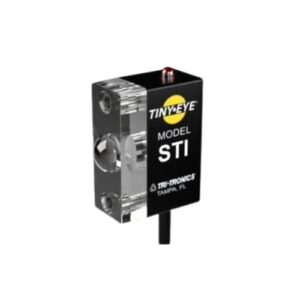
The first requirement for a safe interlock is verifying that the trailer is correctly positioned. Using high-reliability through-beam photoelectric sensors, such as the STIT4 and RTDT4 models, allows the system to detect the precise alignment of the vehicle.
-
Alignment Verification: These sensors are mounted on the exterior of the dock. They confirm that the trailer is perfectly centered and backed up flush against the dock bumpers.
-
Initial Signal: Only when the beam is broken in a specific sequence does the system acknowledge the presence of a vehicle, preventing the engagement of restraints on “phantom” objects or misaligned trailers.
2. Logic Orchestration: The MA1M3-1616T PLC
The “brain” of the dock automation is the Programmable Logic Controller (PLC). In this application, a MA1M3-1616T PLC manages the safety sequence.
-
Sequence of Operations: Upon receiving the sensor signal, the PLC engages the mechanical vehicle restraint (the dock hook). This hook locks onto the truck’s rear impact guard (RIG), physically tethering the vehicle to the building.
-
Interlock Authorization: The PLC will not permit the overhead door to open or the dock leveler to deploy until it receives a “Locked” confirmation from the restraint’s limit switches. This hardware-level interlock eliminates human error during the most dangerous phases of the loading process.
3. Human-Machine Interface (HMI) and Industrial Networking
Inside the warehouse, the forklift operator must have clear, real-time status updates. A compact HMI, such as the Fatek P5070NB, is mounted adjacent to each door.
-
Visual Status: The HMI displays a “Green Light” only when the PLC has confirmed the vehicle is restrained. This provides the operator with the authorization to begin loading operations.
-
System Connectivity: To centralize data for logistics managers, the HMI and PLC are integrated into the facility’s network using an industrial Ethernet switch, such as the 3onedata IES2300SL-5GT-2LV. This allows for the remote monitoring of all dock doors from a single dashboard.
4. External Communication and Visual Alerts (WiFi/4G LTE)
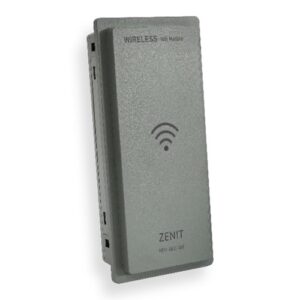
Safety must extend to the yard driver outside. To prevent accidental movement, the system utilizes communication modules like the HEM-WLC-WIFI or HEM-WLC-4G LTE.
-
Driver Notification: These modules synchronize the internal dock status with external signage or the vehicle’s central computer. It provides a strict visual “Red Light” to the driver, indicating that the truck is physically locked and that any attempt to pull away is strictly forbidden.
Critical Benefits for Logistics Operations
The transition from manual dock operations to an automated interlock system, utilizing components available through Logicbus, provides three primary advantages:
-
Life Safety: By physically and logically preventing the trailer from moving during the loading cycle, the risk of fatal forklift falls is virtually eliminated.
-
Infrastructure Protection: The system prevents damage to dock seals, bumpers, and levelers caused by misaligned trailers attempting to dock or premature departures that strain mechanical components.
-
Data-Driven Management: Centralizing the status of dozens of dock doors into a SCADA or WMS environment allows managers to identify bottlenecks, track dock utilization times, and ensure that safety protocols are being followed across the entire facility.
Conclusion: Achieving a Zero-Accident Mandate
Loading dock safety is not merely a compliance requirement; it is a fundamental component of operational resilience. By integrating precision sensing with the robust logic of Fatek and MA1M3 controllers, warehouses can achieve a “Zero-Accident” mandate at the dock. This electromechanical synergy ensures that human life and warehouse assets are protected by the most reliable technology available in the industrial market today.




sales@logicbus.com | support@logicbus.com | +1 619 616 7350 | Start conversation