


In industries such as food processing, packaging, and pharmaceuticals, precision is more than a requirement—it’s a guarantee of compliance, efficiency, and profitability. Automated weighing systems for portion control ensure that every unit leaving the production line meets strict weight tolerances, reducing human error, product giveaway, and regulatory risks.
By integrating load cells, PLCs, rejection mechanisms, and real-time monitoring tools, manufacturers can streamline operations while maintaining the highest standards of quality and traceability.
How Automated Portion Control Works
1. Dynamic Weighing on Conveyor Belts 
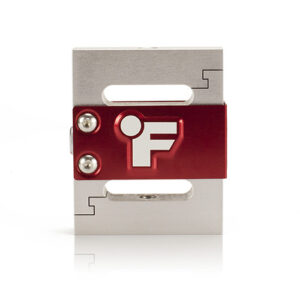
Unlike manual weighing, dynamic systems allow products to be weighed in motion. Load cells, such as the FUTEK FSH04200, are installed beneath conveyor sections to measure each item without slowing down the line. This enables continuous production with uncompromised accuracy.
2. Signal Processing and Integration
The analog signals from load cells require conditioning to maintain stability. Voltage amplifiers like the FUTEK FSH03863 ensure precision before transmitting signals to a FATEK FBs-20MCR2-AC PLC equipped with an FBs-4A2D analog expansion module. This PLC processes data in real time, enabling instant decision-making.
3. Comparison with Pre-Set Tolerances
Each product’s weight is compared to programmed tolerances (e.g., ±2 grams). Products within the correct range proceed seamlessly along the conveyor, while those outside specifications are flagged.
4. Automatic Rejection of Out-of-Spec Products
Rejected products are automatically diverted using pneumatic pushers or air jet systems, eliminating the need for manual inspection and ensuring a fast, hygienic process.
5. Data Logging and Traceability
With ICP-DAS M-7051 data loggers or integration into SCADA systems, every weighing event is stored with details such as batch, date, and operator. This feature is critical for compliance with FDA, HACCP, and other regulations, enabling effortless traceability during audits.
6. Performance Visualization
Operators can monitor efficiency through FATEK P5070SB HMI panels, which display real-time statistics such as total units weighed, rejected items, and production trends. This helps teams take quick corrective actions to maintain consistency.
Advantages of Automated Portion Control
-
Regulatory Compliance: Meets labeling and declaration standards.
-
Cost Savings: Reduces product giveaway by ensuring precise portioning.
-
Increased Efficiency: Eliminates manual weighing and accelerates production lines.
-
Traceability & Quality Assurance: Creates complete records for audits and certifications.
-
Scalability: Flexible system adaptable to different product sizes, weights, and line speeds.
Conclusion
Automated portion control weighing is more than just a technological upgrade—it’s a strategic investment. By combining precision hardware, intelligent PLC control, and real-time data visualization, manufacturers not only secure compliance but also optimize efficiency and profitability.
For industries where precision equals trust, automated weighing systems are the cornerstone of consistent quality and competitive advantage.




sales@logicbus.com | support@logicbus.com | +1 619 616 7350 | Start conversation