

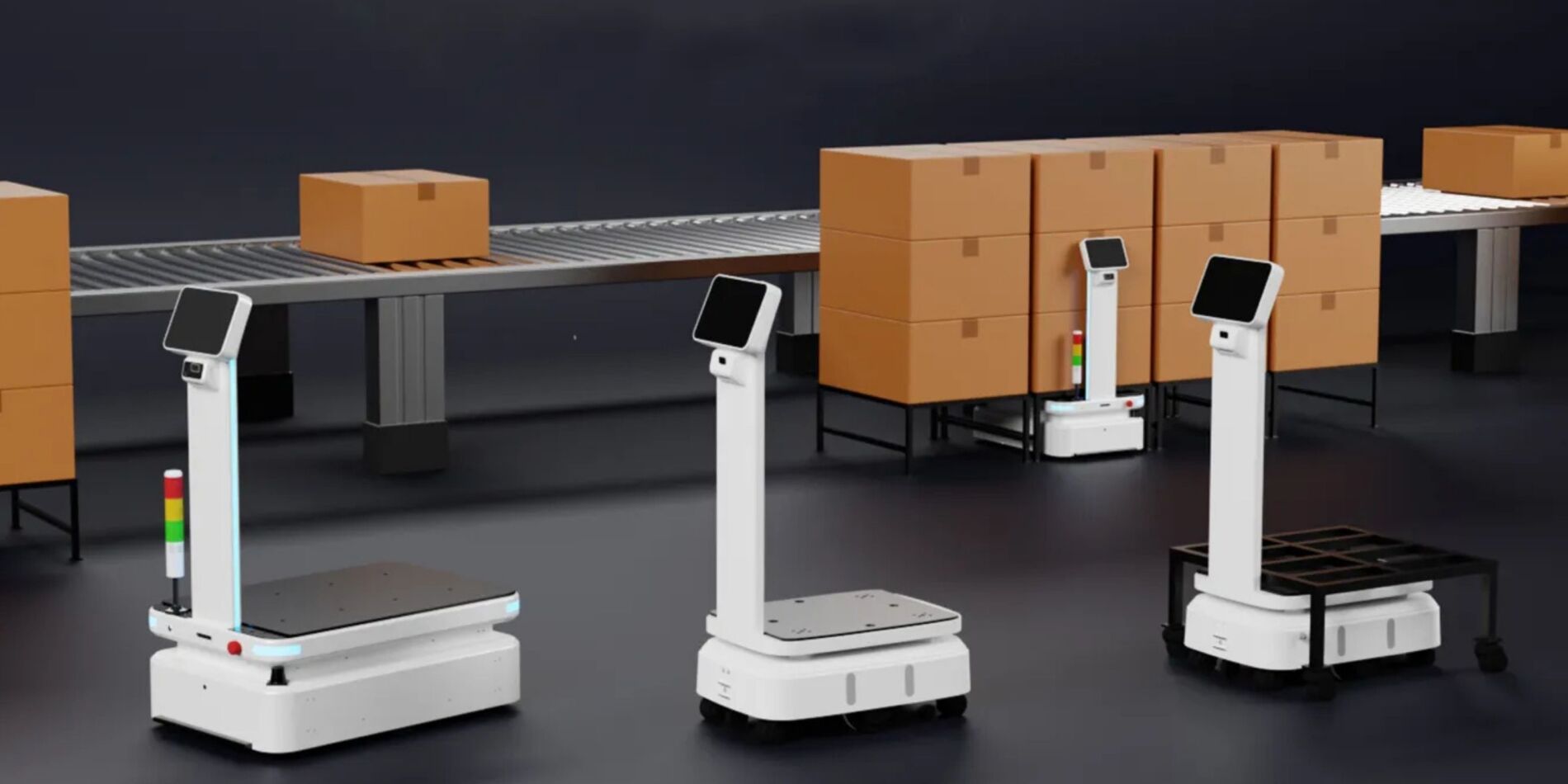
In the era of smart manufacturing, efficiency is no longer defined by production lines alone. More and more manufacturers are realizing a critical truth: what slows production down is often not manufacturing but internal logistics.
When highly automated production lines meet manual, inefficient material handling systems, a common contradiction emerges: fast production, slow logistics. This mismatch has become one of the most critical bottlenecks limiting overall factory performance.
So how can manufacturers break through this limitation and transform intralogistics into a driver of profitability?
The Hidden Challenge: Five Key Bottlenecks in In-Plant Logistics
1. Rhythm Mismatch: When Logistics Can’t Keep Up
Modern production relies on precise Just-In-Time (JIT) delivery protocols. However, manual transport is inherently reactive and inconsistent.
-
The result: Materials arrive late (causing line-down disruptions) or arrive too early and pile up. This leads to production delays or excess line-side inventory, severely reducing overall operational efficiency.
2. Lack of Flexibility: The Cost of Changeovers
As factories shift toward high-mix, low-volume production, product changeovers are becoming much more frequent. Traditional logistics frameworks struggle to adapt to these rapid shifts:
-
Slow response times.
-
Material confusion during transitions.
-
Increased risk of component delivery errors.
-
During changeovers, logistics efficiency can drop by 40% to 60%, directly impacting production continuity.
3. Information Silos: The “Black Box” Problem
In many legacy factories, logistics operations remain completely invisible to enterprise management software:
-
Where are the materials right now?
-
What is the real-time status of the transport task?
-
Are there delays or risks of material shortages at a specific station?
Without real-time visibility, operational decisions must rely on supervisor experience rather than hard metrics, leading to missed tasks and unexpected disruptions.
4. Labor Dependency: Rising Costs, Limited Efficiency
With ongoing industrial labor shortages and increasing operational expenditures, manual material handling is becoming unsustainable:
-
Low baseline efficiency: Typically limited to merely 1–2 tons per worker per shift.
-
High turnover rates among warehouse staff.
-
Persistent ergonomic concerns and workplace safety risks.
-
In many facilities, manual logistics accounts for 30% to 40% of total labor costs.
5. Space Constraints: Complex Environments, Lower Efficiency
Narrow aisles, multi-floor layouts, and highly distributed workstations create complex internal logistics routes. Navigating these environments manually results in longer paths, redundant steps, and compounding inefficiencies that slow down the overall material flow.
From Bottleneck to Advantage: The Rise of Smart Logistics 
Leading manufacturers are no longer just patching logistics problems they are redesigning their intralogistics systems entirely through advanced autonomous robotics.
1. Automated Line-Side Logistics: Matching Production Pace
By deploying Autonomous Mobile Robots (AMRs) and Automated Guided Vehicles (AGVs), factories can replace manual transport with precise, scheduled deliveries.
-
Key capabilities: SLAM-based navigation with zero infrastructure changes, multi-robot fleet coordination, and dynamic real-time routing.
-
Results:
-
On-time delivery rates exceed 99.5%.
-
Material flow efficiency improves by 25% to 40%.
-
Manual transport labor is reduced by up to 70%.
-
2. Flexible Delivery Systems: Built for Changeovers
Smart scheduling systems dynamically adjust transport priorities based on real-time production needs rather than rigid schedules.
-
Core features: Direct Manufacturing Execution System (MES) integration for real-time task updates, mixed fleet coordination (lifting, towing, and carrying robots), and vision-assisted identification.
-
Business impact: Changeover preparation time is reduced by 50%, and error rates drop below 0.03%.
3. Digital Logistics Platforms: Full Visibility & Control
A centralized control system transforms material handling from an unmonitored “black box” into a transparent, data-driven operation.
-
Key functions: Real-time tracking of robots, assets, and task statuses; intelligent automated alerts for shortages, aisle congestion, and hardware faults; and advanced data analytics for continuous process optimization.
-
Management benefits: Improves logistics visibility by 90% and reduces decision-making speed from hours to minutes.
4. Cross-Area Automation: Solving the “Last Mile”
Advanced hardware and software integration enables seamless, unassisted material transport across complex, multi-floor factory environments.
-
Core technologies: Autonomous elevator integration protocols, automatic door access coordination, and narrow-aisle navigation paired with dynamic obstacle avoidance.
-
Efficiency gains: Cross-area transport time is reduced by 35%, and manual intervention drops by 80%.
Implementation Roadmap: A Practical Approach
Transitioning to an automated intralogistics model is most effective when executed in structured, manageable stages:
[ Phase 1: Pilot (1–2 Months) ] ──► [ Phase 2: Scale (3–6 Months) ] ──► [ Phase 3: Optimize ]
    • 1 production line                 • Expand across lines               • Data-driven analytics
    • Validate ROI & integration        • Connect with MES / WMS            • Expand use cases
Key Success Factors
-
Strong management support: To drive digital transformation across departments.
-
Process redesign: Automating optimized workflows rather than flawed manual processes.
-
Structured data foundation: Ensuring seamless software interoperability.
-
Phased investment: Delivering quick wins and visible returns at every stage.
Looking Ahead: Logistics as a Value Driver
Smart logistics has evolved beyond a simple cost-reduction measure into a core strategic asset. It enables data-driven production optimization, flexible manufacturing capabilities, and end-to-end digital connectivity across the entire enterprise.
Real-World Case: An electronics manufacturer deployed a fleet of 15 autonomous robots managed by an intelligent scheduling system, achieving:
-
A 25% increase in overall assembly efficiency.
-
Material handling error rates reduced to a mere 0.03%.
-
An 80% reduction in workplace injuries.
-
Full capital recovery and ROI achieved within 12 to 18 months.
Conclusion: From Supporting Role to Driving Force
Manufacturing competitiveness today is no longer dictated solely by machine capacity or raw production speeds it depends heavily on total system efficiency. Intralogistics sits at the very center of that system.
The factories that win will be those that transform logistics from an operational bottleneck into a competitive driving force ensuring that physical materials move through the plant as intelligently, responsively, and autonomously as data.
Ready to Transform Your Factory Logistics?
At Logicbus, we are official distributors and integration partners for AutoXing Autonomous Mobile Robots. We help manufacturers eliminate transport inefficiencies, reduce labor dependency, and scale production seamlessly with industry-leading AMR technology.
-
Request a technical consultation & live demo with our automation engineering team.
-
Discover how leading factories are upgrading their logistics systems with zero facility modifications.
Contact Logicbus Today to Design Your Customized Automation Solution
About AutoXing Robotics
AutoXing is a global service provider of intelligent autonomous mobile robots powered by Level 4 self-driving technology. Its core engineering team hails from industry-leading mapping, navigation, and autonomous vehicle enterprises.
AutoXing AMRs deliver key operational benefits:
-
Zero infrastructure modification (markerless Laser SLAM navigation).
-
Fast, simple deployment in minutes.
-
Dynamic obstacle avoidance and fluid navigation in mixed human-machine traffic.
-
Seamless IoT integration with elevators, automated doors, and security gates.
-
Centimeter-level positioning accuracy with open APIs for MES, WMS, and ERP connectivity.
Fully backed by Logicbus with local technical support, system engineering, and complete after-sales service.




sales@logicbus.com | support@logicbus.com | +1 619 616 7350 | Start conversation