

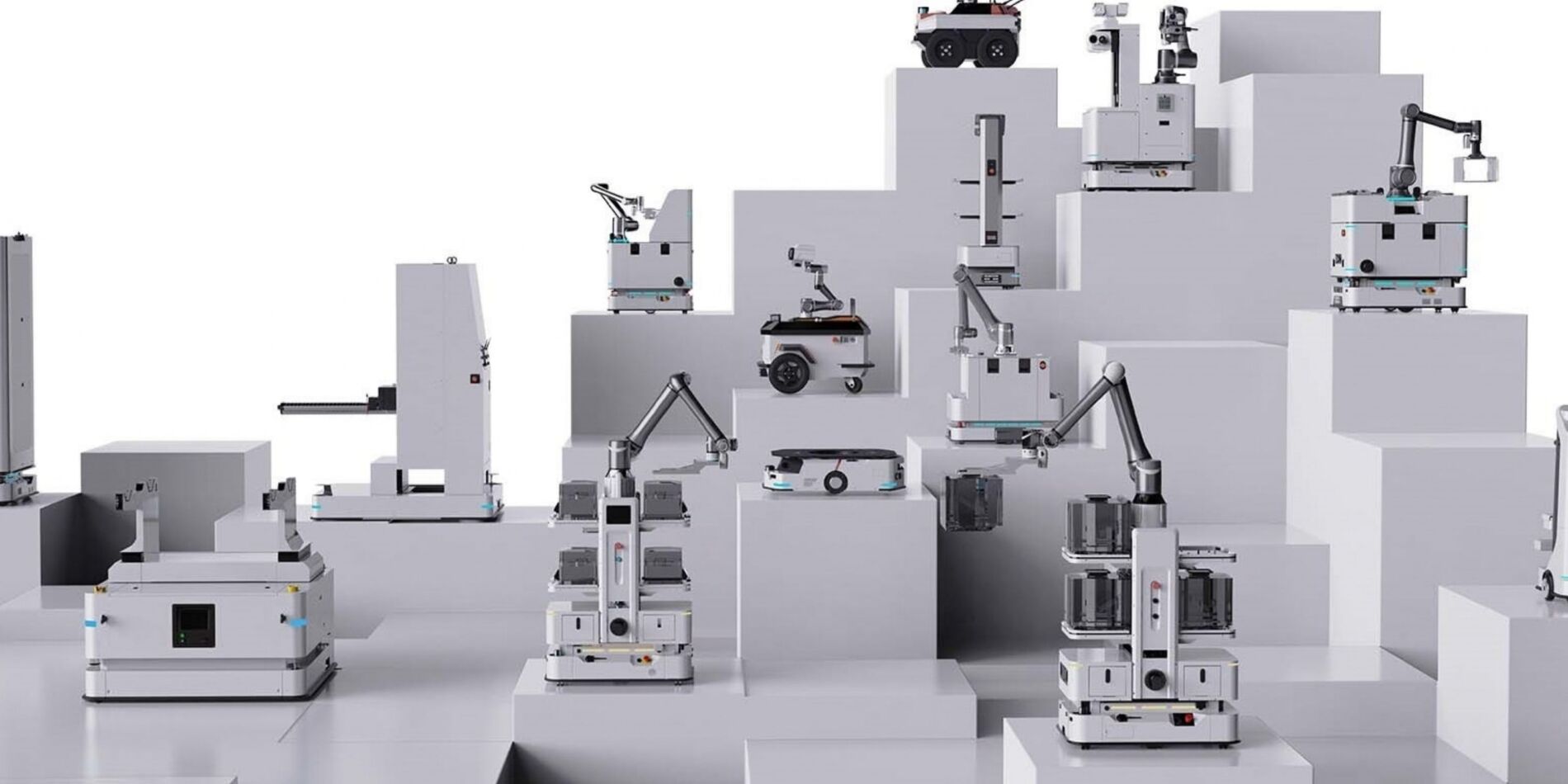
Autonomous Mobile Robots (AMRs) represent the next evolution in material handling and industrial automation. Unlike traditional Automated Guided Vehicles (AGVs) that follow fixed, physical paths taped to the factory floor, AMRs leverage sophisticated navigation technologies, sensor fusion, and intelligent control systems to operate dynamically within complex environments.
This technical guide explores the fundamental architecture, operational frameworks, navigation mechanisms, and fleet management protocols that enable AMRs to transform modern factory intralogistics.
Core Functions of AMR Systems: The Four Operational Questions 
An AMR’s operational intelligence is defined by its ability to continuously solve four fundamental questions in real time:
 ┌────────────────────────────────────────────────────────────────────────┐
 │                      THE 4 CORE AMR QUESTIONS                          │
 ├──────────────────────────┬─────────────────────────────────────────────┤
 │ 1. Localization          │ "Where am I?" (Positioning & orientation)   │
 │ 2. Mission Planning      │ "Where am I going?" (Task & route planning) │
 │ 3. Motion Execution      │ "How do I get there?" (Trajectory control)  │
 │ 4. Operation Execution   │ "What do I do on arrival?" (Payload task)   │
 └──────────────────────────┴─────────────────────────────────────────────┘
These interconnected functions allow the AMR to receive higher-level commands from factory software (MES, ERP, or WMS), break down objectives into actionable movement sequences, navigate around obstacles dynamically, and execute precise payload handling at the target destination.
Navigation and Guidance: The Foundation of Autonomy
Integrated navigation establishes the robot’s real-time position within a global coordinate map, while guidance algorithms calculate necessary speed and steering inputs to follow optimized paths.
1. Wired & Path-Based Navigation
Path-based systems rely on physically defined routes installed directly onto or into the facility floor:
-
Electromagnetic Navigation: Embedded subterranean wires emitting coded signals.
-
Magnetic Tape Navigation: Surface-mounted magnetic strips.
-
Optical Tape Navigation: Visual path-following using high-contrast colored tapes.
Trade-off: High reliability on fixed routes, but zero operational flexibility. Any layout change requires physical facility renovation.
2. Wireless & Natural Navigation
Flexible navigation methods enable dynamic path selection and real-time obstacle avoidance:
| Navigation Technology | Operating Mechanism | Best Use Case |
| Laser Reflector | Triangulation using fixed reflective targets on walls/pillars. | High-precision industrial environments. |
| Natural Feature (LiDAR SLAM) | Maps environment using existing landmarks (walls, columns, equipment) without artificial markers. | Highly dynamic plants and flexible manufacturing bays. |
| Inertial (IMU / Dead Reckoning) | Calculates displacement via gyroscopes and wheel encoders, recalibrated at known checkpoints. | Continuous trajectory correction over long distances. |
| Visual (vSLAM) | Camera-based 2D/3D mapping and visual feature tracking. | Complex 3D environments requiring spatial feature recognition. |
Motion Control and Map Infrastructure
AMR motion is governed by control algorithms managing linear velocity, steering angles, acceleration, and deceleration within strict safety thresholds.
To navigate predictably, fleet management software structures the facility map into topological networks:
-
Nodes: Defined spatial coordinates with specific orientation parameters.
-
Segments: Connecting pathways with defined speed limits and trajectory guidelines.
-
Stations: Specialized nodes assigned to operational tasks (loading/unloading, docking, automatic battery charging).
Intelligent Fleet Management at Scale
When deploying multi-robot fleets, centralized management software becomes the primary driver of operational throughput and collision prevention.
   [ Enterprise Systems: MES / WMS / ERP ]
                     │
                     ▼
┌─────────────────────────────────────────┐
│        AMR FLEET MANAGER SOFTWARE       │
├─────────────────────────────────────────┤
│ • Task Allocation  ──► Proximity, battery level, & tooling match
│ • Traffic Control  ──► Path reservation & dynamic right-of-way
│ • Deadlock Lockout ──► Proactive anti-congestion routing
└─────────────────────────────────────────┘
1. Resource Allocation & Task Dispatch
Intelligent scheduling engines dynamically assign tasks to the optimal AMR based on:
-
Proximity to the material pickup point.
-
Current operational status (idle, in-transit, charging).
-
Battery state-of-charge and scheduled maintenance windows.
-
Specialized top-module hardware (lifters, roller beds, or robotic arms).
2. Multi-Robot Traffic Management
Coordinating dozens or hundreds of robots across shared aisles requires robust traffic protocols:
-
Path Reservation: Exclusive segment allocation during robot transit to prevent head-to-head encounters.
-
Conflict Zone Negotiation: Dynamic right-of-way negotiation at busy intersections.
-
Deadlock Prevention: Proactive algorithms that detect potential gridlock scenarios and reroute traffic before bottlenecks occur.
Multi-Layered Industrial Safety Systems
To operate safely alongside human workers and manual equipment, modern AMRs—such as Youibot platforms—integrate multi-sensor fusion architectures.
Collision Avoidance Sensor Architecture
-
Safety LiDAR Scanners: Long-range 2D/3D horizontal field scanning for path clearance.
-
Infrared Proximity Sensors: Near-field detection protecting ground-level zones.
-
Ultrasonic Sensors: Material-agnostic detection for transparent, glass, or highly reflective objects.
-
Tactile Contact Bumpers: Final physical safety barrier triggering instantaneous E-stop upon physical contact.
Operational Safeguards
-
Geofencing: Defined digital zones with enforced speed limits and safety protocols.
-
Audible & Visual Indicators: Strobe lights, turn signals, and audio alerts.
-
Emergency Stop Protocols: Physical E-stop buttons and remote manual override capabilities.
Power Management & Drive Architecture
-
Intelligent Power Systems: High-density lithium batteries featuring automated opportunity charging during idle windows, health monitoring, and hot-swapping options for zero-downtime 24/7 operations.
-
Drive Configurations: Differential steering for zero-turn-radius maneuvering, omnidirectional Mecanum platforms for tight aisle positioning, and load-adaptive torque control.
Deploy Youibot AMRs with Logicbus
Autonomous Mobile Robots are no longer a future concept—they are the foundational backbone of flexible, data-driven intralogistics. By combining markerless SLAM navigation, intelligent fleet management, and certified safety systems, AMRs empower manufacturers to scale operations effortlessly.
At Logicbus, we are official distributors and integration partners for Youibot Autonomous Mobile Robots across North America. Our application engineering team assists your facility through every step of the automation lifecycle: from site audits and fleet simulation to full MES/WMS integration and ongoing technical support.
-
Ready to evaluate how Youibot AMRs can optimize material flow in your facility?
-
Contact our engineering team today to schedule a technical consultation and live demo.
Explore Industrial Mobile Robotics at Logicbus.com




sales@logicbus.com | support@logicbus.com | +1 619 616 7350 | Start conversation