

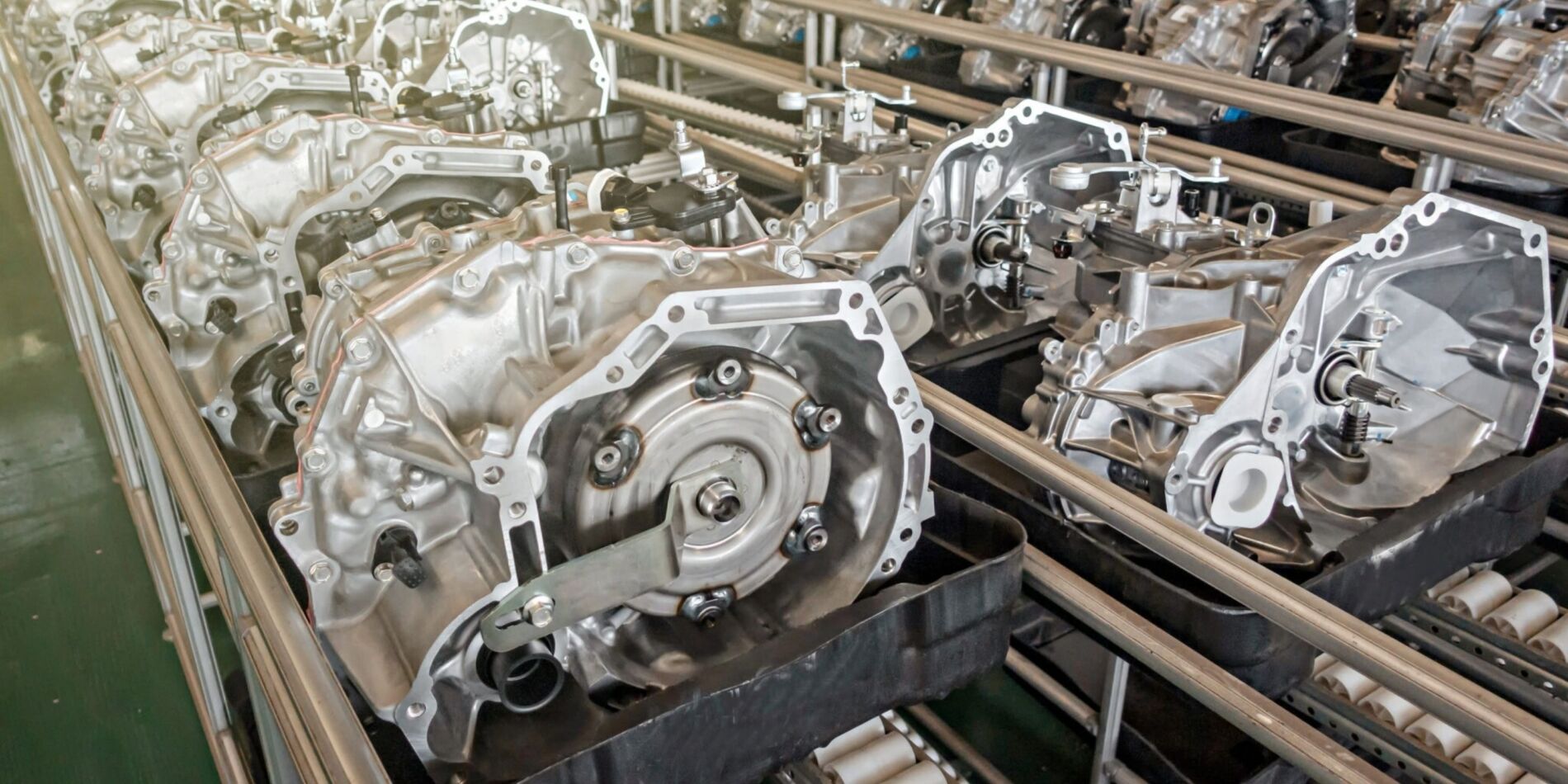
In lean manufacturing, operational efficiency is not about producing at maximum speed; it is about producing at the exact pace required by customer demand. To achieve this synchronization, manufacturers rely on a fundamental concept: Takt Time.
By aligning the pace of production with market demand, Takt Time ensures that products are made consistently, preventing both overproduction and underproduction.
What is Takt Time?
Takt Time is the rate at which a manufacturing process must operate to meet customer demand. The word “Takt” comes from the German word for “rhythm,” “beat,” or “meter” (similar to a metronome in music).
Rather than driving production based on speculative forecasts or maximum equipment capacity, Takt Time sets a steady pace for the entire facility to deliver the exact quantity of finished goods required by the customer on time.
Why Takt Time Matters in Factory Operations
-
Alignment with Customer Demand: Drastically reduces the risk of overproduction (excess inventory) and underproduction (lost sales and missed delivery dates).
-
Cost Reduction: By eliminating excess work-in-progress (WIP) and finished goods inventory, facilities minimize holding costs and free up working capital.
-
Consistent & Predictable Workflow: Creates a balanced workload across various production stages. This consistency reduces process variability, minimizes idle time, and improves overall productivity.
-
Foundation for Continuous Improvement (Kaizen): By analyzing variances between actual production speeds and the target Takt Time, engineers can easily identify bottlenecks, wastes (muda), and process improvement opportunities.
How to Calculate Takt Time Step-by-Step
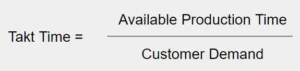
The standard formula for calculating Takt Time is:
Practical Calculation Example:
Step 1: Determine Available Production Time
Calculate the net working time available for production by subtracting planned downtime (such as meal breaks, preventive maintenance, and shift changeover meetings).
-
Total Shift Time: 8 hours per day (8 hrs × 60 min = 480 minutes)
-
Planned Downtime: Two 15-minute breaks (30 minutes total)
-
Available Production Time: 480 min – 30 min = 450 minutes/day


Step 2: Determine Customer Demand
Calculate the number of units required by the customer within the exact same time period.
-
Monthly Demand: 9,000 units
-
Operating Days per Month: 30 days
-
Daily Customer Demand: 9,000 units / 30 days = 300 pieces/day


Step 3: Apply the Takt Time Formula
Takt Time = 450 minutes / 300 pieces = 1.5 minutes/piece
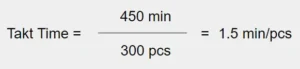
What this means: The factory must complete one finished piece every 1.5 minutes (or 90 seconds) to perfectly match customer demand.
Takt Time vs. Cycle Time
While these two terms are often used interchangeably, they represent two distinct operational metrics:
-
Takt Time: The required rate of customer demand.
-
Cycle Time: The actual time taken to produce one unit.
| Scenario | Condition | Operational Impact |
| Cycle Time > Takt Time |
Production is slower than customer demand. |
Leads to shipping delays, unhappy customers, and unplanned overtime. |
| Cycle Time < Takt Time |
Production is faster than customer demand. |
Results in overproduction, bloated WIP inventory, or worker idle time. |
| Cycle Time = Takt Time | Production is perfectly synchronized with demand. | Ideal continuous flow with zero synchronization waste. |
Overcoming Implementation Challenges with Industrial IoT
In real-world manufacturing environments, maintaining target Takt Time can be challenging due to demand fluctuations, unscheduled machine downtime, and supply chain bottlenecks.
To address these variances dynamically, modern digital factories integrate Industrial IoT monitoring systems, automated piece counters, and digital Andon displays.
Optimize Your Plant’s Performance with Logicbus
At Logicbus, we provide end-to-end solutions for real-time data acquisition, IoT production counters, industrial sensors, and OEE / Cycle Time tracking systems.
Our technologies allow plant managers to visualize line performance on digital dashboards or SCADA systems, delivering instant alerts whenever actual Cycle Time drifts away from your target Takt Time.
-
Looking to digitize production counting and cycle time tracking on your shop floor?
-
Consult with our application engineering team to select the right sensors and data loggers for your facility.
Explore Industrial Automation & IoT Solutions at Logicbus.com




sales@logicbus.com | support@logicbus.com | +1 619 616 7350 | Start conversation