


A failed pressure switch in a municipal wet well leads directly to pump short-cycling, flooded stations, and immediate regulatory scrutiny. While standard distribution networks operate continuously at 40 to 80 PSI, wastewater systems introduce highly corrosive media, suspended solids, and hydrogen sulfide gas that rapidly degrade standard sensing elements. Selecting the correct switch prevents catastrophic over-pressurization, eliminates premature motor burnout, and ensures continuous operational compliance.
Core Switch Technologies and Control Integration 
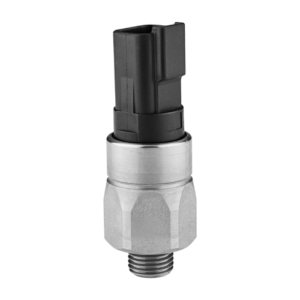
Engineers must choose between mechanical and electronic switching mechanisms based on the facility’s cycle frequency and automation architecture.
Mechanical pressure switches rely on a physical diaphragm, piston, or bellows that deflects under pressure to actuate an electrical contact. They are self-powered and remain the standard for basic well pump control. However, their moving parts suffer mechanical wear over time and are highly susceptible to water hammer—pressure transients caused by rapid valve closures that often exceed the switch’s maximum rating.
Electronic pressure switches utilize solid-state sensing elements and digital circuitry. They eliminate mechanical wear, drastically increasing the cycle life required for demanding lift stations. These units allow precise programming of setpoints and dead bands while providing the necessary digital or relay outputs for direct integration into plant SCADA and PLC systems.
Sizing Ranges, Dead Band, and Wetted Materials
Specifying a switch strictly by its maximum threshold guarantees poor performance. To maximize accuracy and component lifespan, the normal operating pressure must fall within the middle third of the switch’s rated scale. For a system operating continuously at 60 PSI, specifying a switch rated to 150 PSI delivers superior long-term reliability compared to a unit maxing out at 75 PSI.
Pump control operations also require proper dead band (hysteresis) configuration. In municipal networks, a pressure differential of 15 to 20 PSI between the cut-in and cut-out points is optimal. A dead band that is too tight forces the pump to cycle rapidly, destroying the motor, whereas an excessively wide dead band causes system starvation before the pump restarts.
Chemical Compatibility and Certifications
The physical components contacting the process media—the wetted materials—dictate the survival of the switch.
-
Standard 304 stainless steel degrades in wastewater environments with elevated chlorides.
-
316L stainless steel paired with EPDM or FKM seals is mandatory for handling chlorine and chemical disinfection byproducts.
-
Any switch deployed in drinking water distribution must carry NSF/ANSI 61 certification to prevent chemical leaching and public health liabilities.
Industrial Application Scenarios
-
Potable Water Distribution: Requires strict adherence to NSF/ANSI 61 compliance, utilizing 316L stainless steel connections. Sensors must withstand frequent baseline pressures of 40 to 80 PSI while surviving unexpected hydraulic surges.
-
Wastewater Lift Stations: Demands a minimum ingress protection of IP67 or IP68 to survive wet-well environments. High-cycle electronic switches with flush diaphragms prevent sludge from clogging the process connection.
-
Chemical Dosing Systems: Requires specialized corrosion-resistant housings engineered to handle sodium hypochlorite or ferric chloride injections, where tight electronic dead bands ensure accurate chemical delivery without over-dosing.
-
Anaerobic Digesters: Installations in sludge handling zones generating biogas mandate strict ATEX/IECEx certifications for explosive atmospheres.
Technical Comparison: Mechanical vs. Electronic
| Parameter | Mechanical Pressure Switches | Electronic Pressure Switches |
| Sensing Element | Physical diaphragm, piston, or bellows | Solid-state sensor |
| Setpoint Adjustability | Limited hardware adjustment | Fully programmable digital settings |
| Cycle Life | Moderate (mechanical wear) | Extremely high (no moving parts) |
| System Integration | Discrete on/off relay | SCADA/PLC compatible outputs |
| Water Hammer Tolerance | Low (susceptible to physical damage) | High (electronic dampening available) |
| Best Application Fit | Basic pump control, legacy well systems | Lift stations, tight process tolerances, chemical dosing |
Water hammer transients, incorrect IP ratings, and chemical incompatibility remain the leading causes of sensor failure in fluid handling. Preventing these failures requires aligning wetted materials, cycle life expectations, and electrical integration requirements with the exact conditions of the process media. Upgrading legacy mechanical controls or specifying components for new municipal infrastructure requires rigorous application engineering. Contact the process control experts at www.logicbus.com to review your system parameters and source reliable industrial instrumentation for your North American facilities.




sales@logicbus.com | support@logicbus.com | +1 619 616 7350 | Start conversation