

In heavy civil construction and highway engineering, the long-term durability and structural integrity of an asphalt road depend heavily on a single critical factor: precise temperature control during the paving and compaction process.
If asphalt is compacted when it has cooled too much, it cannot reach its target density, leaving excessive air voids that lead to cracking, rutting, and premature road failure. Conversely, if asphalt is held at excessively high temperatures for too long, the bitumen binder degrades, weakening the entire mix.
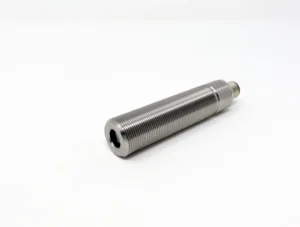
To solve this environmental and operational challenge on heavy equipment, the PyroCV Series infrared temperature sensor provides a rugged, non-contact thermal monitoring solution purpose-built for harsh construction machinery environments.
The Thermal Challenge in Asphalt Paving 
To ensure maximum density and pavement longevity, contractors must monitor temperature within strict operational windows throughout the paving workflow:
-
Laying Temperature: Typically ranges between 95°C and 190°C as the paver distributes the hot mix asphalt (HMA).
-
Minimum Rolling Temperature: Must generally remain above 75°C during initial compaction.
-
Compaction Time Window: Monitoring road surface temperatures before and after laying helps crews predict how much time remains to roll the mix before it cools past the compaction threshold.
Key Features of the PyroCV Sensor for Heavy Equipment
Engineered by Calex, the PyroCV is designed specifically to withstand the severe vibration, outdoor weathering, and electromagnetic noise inherent to heavy construction machinery.
• Communication Options: CAN bus or Analog Voltage Output
• EMC Certified for heavy construction machinery environments
• Ambient Operating Temperature: -40°C to +85°C
• Fast, continuous, non-contact infrared measurement
Primary Technical Advantages
-
Direct Vehicle Integration: The optional CAN bus interface allows temperature data to integrate directly into the machine’s control network (J1939 / CANopen) or operator displays.
-
Extended Ambient Temperature Range: Operates reliably from -40°C to +85°C, ensuring performance in extreme ambient climates.
-
Heavy-Duty Construction: Built to meet rigorous Electromagnetic Compatibility (EMC) standards required for construction equipment.
Typical Field Installation Setup
To achieve complete thermal visibility across the paving site, sensors are strategically deployed across the equipment fleet:
-
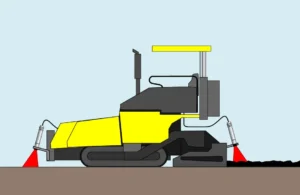
Paver-Mounted Sensors: Two PyroCV sensors are installed on the paver:
-
Sensor 1 (Leading): Measures the road bed or tack/bond coat surface temperature immediately before asphalt is laid.
-
Sensor 2 (Trailing): Measures the temperature of the freshly laid asphalt mat immediately behind the screed.
-
-
Roller-Mounted Sensor: A third PyroCV sensor is mounted on the compaction roller, aimed at the asphalt mat just ahead of the drum to verify the mix remains above the minimum rolling temperature (>75°C).
Field Application Tips for Maximum Accuracy
-
High Emissivity: Asphalt and road construction materials (including tack and bond coats) naturally exhibit very high thermal emissivity, making them ideal for accurate infrared measurement without complex emissivity adjustments.
-
Spot Size vs. Target Area: Ensure the sensor’s measured spot size is smaller than the width of the asphalt mat being measured.
-
Clear Optical View: Mount the sensor where it maintains an unobstructed line of sight, away from dense steam or mechanical obstructions.
-
Lens Maintenance: Keep the optical lens clean and free of dust, oil film, or condensation to maintain calibration accuracy.
End-to-End Asphalt Thermal Monitoring
Temperature tracking extends beyond the paver mat. Non-contact infrared sensors are deployed across every phase of the asphalt supply chain:
| Process Stage | Measurement Point | Operational Goal |
| Mixing Plant | Material stream discharging into transport haul trucks. | Verifies mix leaves the plant within thermal specifications. |
| Transport | Haul truck bed / Arrival at job site. | Prevents cold-load delivery and thermal segregation. |
| Paving (Paver) | Base road bed and freshly laid asphalt mat. | Determines remaining time window for compaction. |
| Compaction (Roller) | Asphalt surface directly in front of the roller drum. | Guarantees compaction occurs above 75°C to minimize air voids. |
PyroCV Technical Overview
| Parameter | Specification |
| Measurement Technology | Non-contact Infrared Pyrometry |
| Output Options | CAN bus or Voltage Output |
| Ambient Operating Temp | -40°C to +85°C |
| Compliance | Heavy industrial EMC tested for construction vehicles |
| Primary Applications | Asphalt paving, compaction rollers, heavy machinery, batch plants |
Partner with Logicbus for Industrial Sensing & CAN Solutions
At Logicbus, we supply non-contact temperature sensors, rugged pyrometers, and CAN bus integration hardware for demanding heavy equipment and civil engineering applications across North America.
Whether you need to outfit asphalt pavers, compaction equipment, or industrial batch plants with real-time temperature monitoring:
-
Consult with our application engineering team to select the right optics and output configurations.
-
Explore our full range of heavy-duty industrial infrared sensors.
Explore Industrial Sensing Solutions at Logicbus.com




sales@logicbus.com | support@logicbus.com | +1 619 616 7350 | Start conversation